
People in Pakistan often compare Punjab Sahulat Bazaar (PSBA) with private grocery delivery apps because both claim to offer affordable groceries and home delivery. The confusion usually starts when PSBA advertises lower prices while private apps promise faster service. This page explains the real difference in simple terms. You will learn how prices are set, how delivery works, who handles complaints, and when each option makes more sense.
What Is Punjab Sahulat Bazaar (PSBA)?
Punjab Sahulat Bazaar (PSBA) is a government-backed authority that runs subsidized grocery bazaars across Punjab. Prices are linked to official district commissioner rates, and the government covers the subsidy so essentials can be sold below market prices. PSBA operates physical stores and also offers delivery in selected cities.
What Are Private Grocery Delivery Apps?
Private grocery apps are commercial platforms that connect customers with vendors or dark stores through a mobile app. These apps earn money through commissions, delivery fees, and service charges. Prices may change based on demand, time, or location.
Why Are People Confused Between PSBA and Grocery Apps?
- Both offer groceries and delivery
- PSBA promotes lower prices
- Apps promote speed and convenience
- Inflation increases price sensitivity
Most confusion happens when users do not compare the final bill or understand how prices are calculated.
How Are PSBA Prices Set?
PSBA prices are linked to district commissioner (DC) rates. The government subsidizes the difference so prices can stay 10 to 30 percent lower than open market rates in many cases.
- Prices are fixed and publicly displayed
- Discounts are funded by the provincial budget
- PSBA can absorb losses during inflation or Ramzan
How Do Private Grocery Apps Price Products?
Private grocery apps use commission-based pricing. Vendors pay platform fees, and delivery charges are added to customer orders.
- Commissions and service fees increase final prices
- Surge pricing may apply during peak demand
- Pricing is controlled by proprietary algorithms
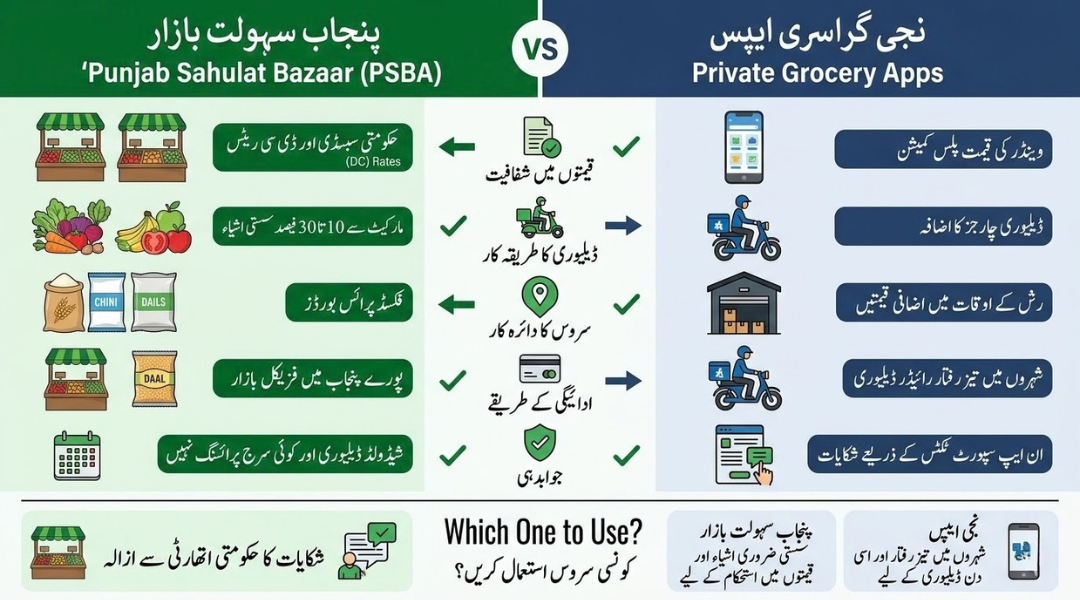
PSBA vs Private Grocery Apps: Quick Comparison
| Feature | PSBA | Private Grocery Apps |
|---|---|---|
| Price system | DC rates with subsidy | Vendor price plus commissions |
| Price transparency | High | Low |
| Delivery | Physical bazaars and scheduled delivery | Riders and dark stores |
| Coverage | District and tehsil expansion | Urban cities only |
| Payment | Cash and digital | App-based, COD and digital |
| Accountability | Government authority | Platform policies |
How Does Delivery Work in PSBA?
PSBA operates physical bazaars across Punjab. Home delivery is available in selected cities and during special campaigns.
- Free delivery for elderly and disabled users during some periods
- No surge pricing
- Physical stores available if delivery is delayed
How Does Delivery Work in Private Grocery Apps?
Private apps rely on freelance riders and dark stores. Delivery is fast within cities but depends on internet access and rider availability.
- Delivery fees may increase during peak hours
- Service may pause during strikes or outages
- Limited to major urban areas
Who Is Responsible If Something Goes Wrong?
With PSBA, responsibility lies with a government authority and complaints can be escalated through official channels.
With private apps, responsibility is often split between the vendor and the platform. Refund approval is usually controlled by the app.
How Do Complaints and Refunds Work?
PSBA complaints can be escalated from the bazaar level to district and provincial authorities. Public accountability laws apply.
Private grocery apps rely on in-app support tickets. There is no external appeal beyond the platform.
Which Model Is More Transparent?
PSBA follows public disclosure rules and government oversight. Pricing mechanisms and authority structure are subject to transparency laws.
Private grocery apps do not publicly disclose pricing algorithms, commission structures, or refund approval rates.
Who Can Actually Use These Services?
PSBA
- No smartphone required
- Cash payments accepted
- Urdu-language operations
- Designed for low-income and underserved users
Private Grocery Apps
- Smartphone required
- App-based access only
- Urban-focused
- Limited support for unbanked users
How Do They Perform During Ramzan or Inflation?
PSBA is designed to operate during crises. Government subsidies allow price stability during Ramzan and inflation spikes.
Private grocery apps depend on market conditions. Some quick-commerce services shut down in Pakistan due to high operating costs.
Common Mistakes People Make
- Assuming apps are always cheaper
- Ignoring delivery and service fees
- Expecting app delivery in rural areas
- Not checking PSBA rates first
Frequently Asked Questions
Is PSBA cheaper than private grocery apps?
Yes. PSBA is often cheaper for essentials because prices are subsidized and linked to district rates.
Does PSBA offer home delivery?
Yes. PSBA offers delivery in selected cities and during special campaigns.
Can grocery apps be cheaper during promotions?
Yes. Short-term promotions can be cheaper, but the final bill should always be checked.
What should I use for urgent same-day needs?
Private grocery apps are faster in cities. PSBA is better for planned purchases.
How do I file a complaint with PSBA?
Start at the bazaar level and escalate to district or provincial authorities if needed.
Final Takeaway
If saving money and price stability matter, PSBA is the better option for regular grocery needs. If speed and convenience matter and you live in a city, private grocery apps can help. The best approach is to check PSBA prices first and use apps only when speed or specific brands are required.